
The Potential of an Empty Desk – Eric Einhorn
/
Do you remember what it felt like to move into your first apartment or house? The empty rooms seemed both cavernous and claustrophobic. It’s not until you allowed yourself some time to sit with the space and slowly figure out how your belongings fit that the space started to feel like your own. Years later, it feels like it was always that way.
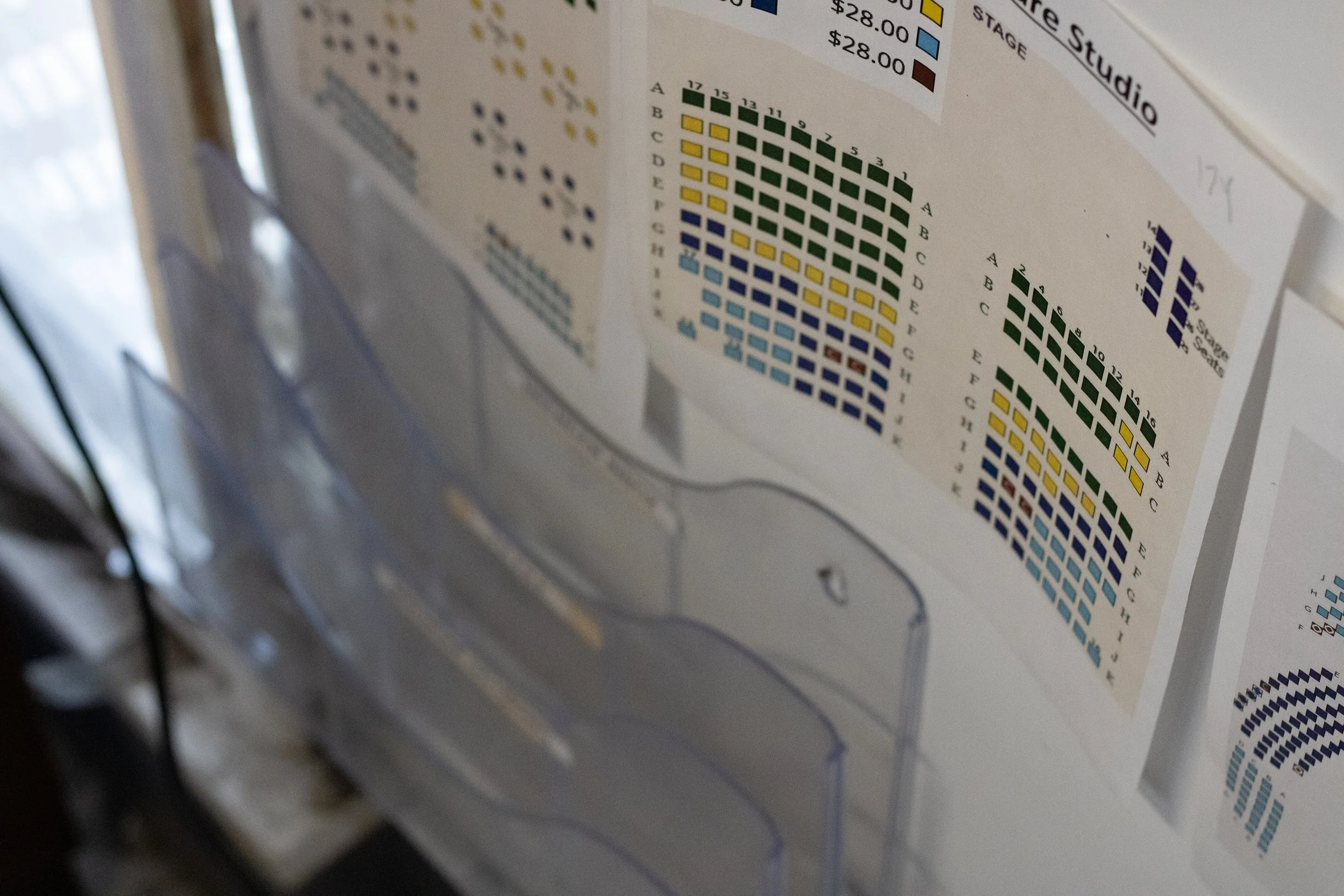
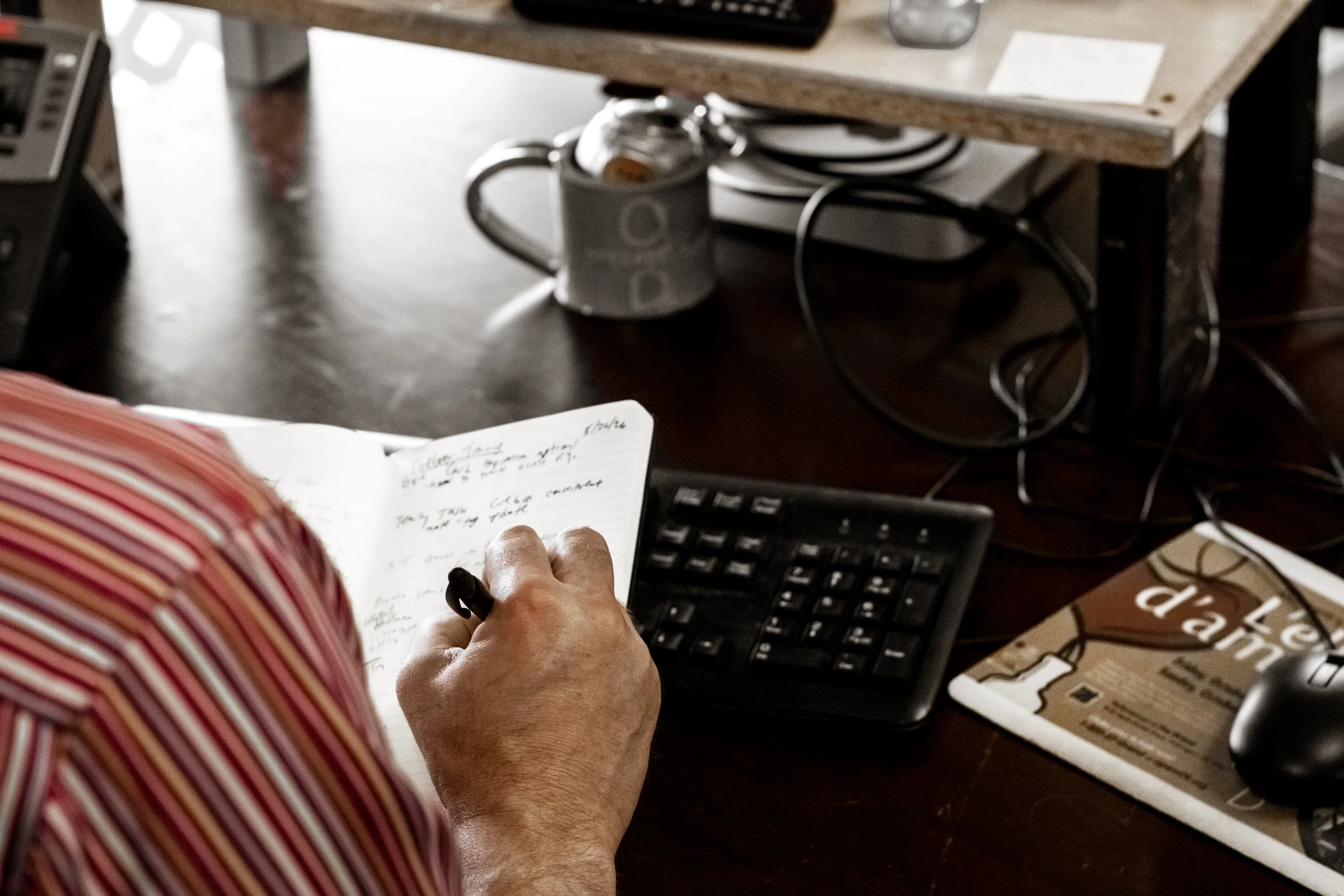
I’m finding similar parallels as I begin my time as General Director of OperaDelaware. My predecessor, Brendan Cooke, performed the herculean task of cleaning out an office he occupied for 14 years and gave me the gift of an empty desk. As I have sat at that desk for the last eight days, I often found myself pausing to look around the space. In the midst of the exciting, high-energy time that is the beginning of a new position, I am enjoying the moments of looking at what remains: theater seating charts posted on the wall, plastic document shelves, the dry erase board with a few critical phone numbers still written down. Things like these are what has been left for me to use, change, or discard at my discretion.
I look at the plastic document shelf and ask myself “why is this here?” and “what role did it play before I arrived?” Only after asking these crucial questions can I decide what to do with the item. I am applying these same kinds of questions to everything I encounter at OperaDelaware, from programming and organizational priorities, to cubicle walls and restroom trash cans. Everything requires careful consideration as I begin my journey in this role. It is not my job to simply throw away the plastic document shelf because I don’t typically use something like that, but to ask “why wouldn’t I?” It clearly served a purpose before I got here: maybe it held artist contracts, musical scores, or photos from the latest production. And maybe I can continue using it in some way to shape the work that I do.
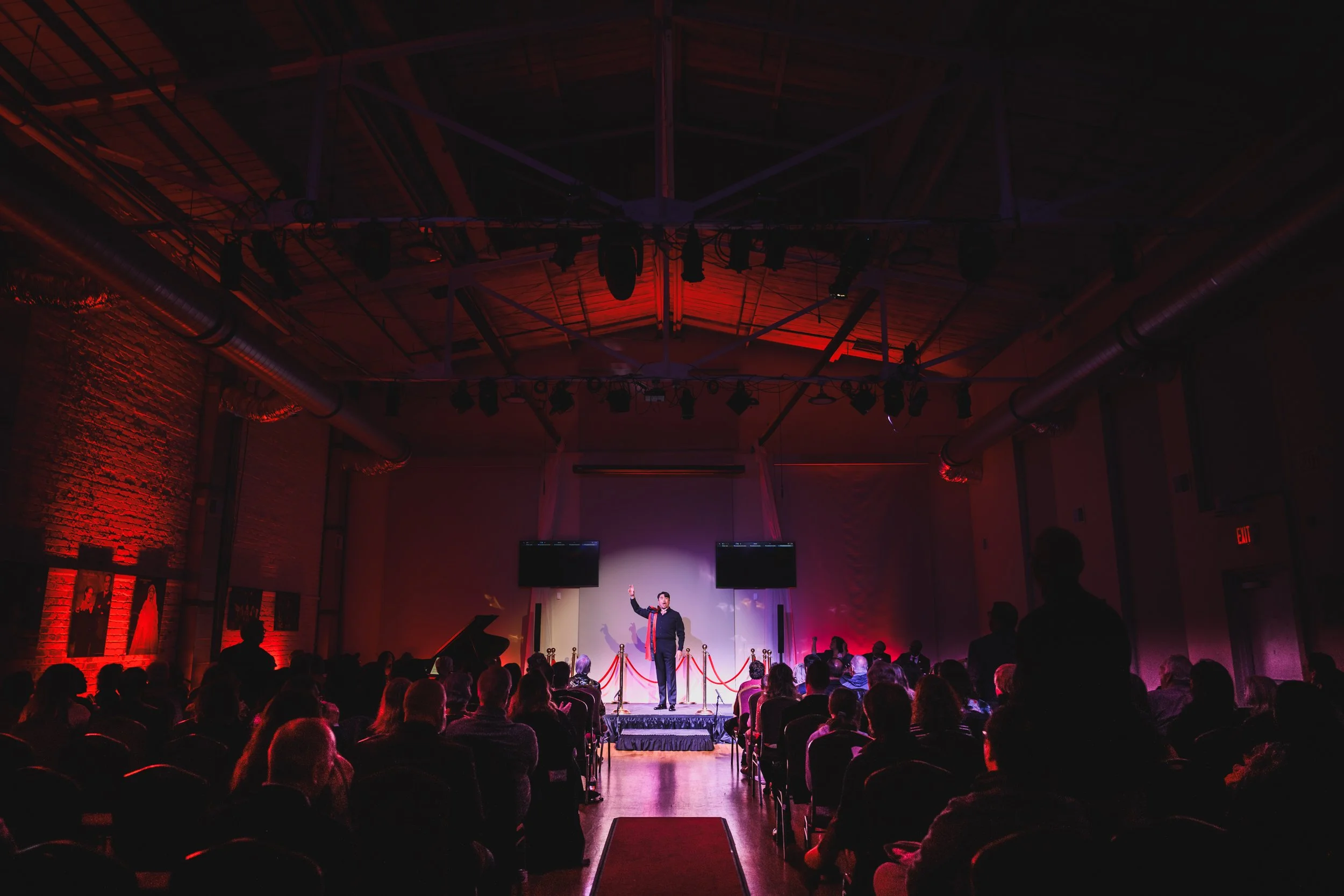
ethel l. sayre recital hall | Operadelaware studios | photo by moonloop photography
Building on the foundation of those that came before me is a humbling and gratifying experience. From the moment I was appointed, I have been trying to examine every corner of the work that OperaDelaware does, as well as look extensively at our beautiful facility which is home to our administrative offices and two performance spaces. This examination allowed me to more fully understand the resources at the company’s disposal, which propelled much of my artistic planning for the 2026-27 season.
OperaDelaware has recently been a pioneer in the opera field by creating the Company Artist Model. This pilot program looks at the way artists are employed and how work is done within our industry. For the last two years, the program brought four singers into the company as full-time staff members, making them the “hometown roster” of singers for the company. Their frequent appearances on our mainstage and in our studio created a link with the community that generated engagement like never before. The program also guides each artist through a distinct administrative pathway specifically designed for their skills and interests.
When I began my time at OperaDelaware, my first priority was to program the 2026-27 season. As with the plastic document shelf, I examined the resources at my disposal to create something I am already very proud of. Having both a group of full-time singers and our own performance spaces allowed me to program a new short opera every month. My hope is that the deep community connections these singers have made over the last two years will help to strengthen audience response for this new series of chamber operas.
Along with programming, I have been looking inward at the company as our staffing landscape is shifting. Once again I considered the pre-existing resources at my disposal alongside the current needs of the company. Those incredible resources include two long-serving staff members and three Company Artists with a deep commitment to and knowledge of the company. Reassigning duties and building our Company Artists’ administrative pathways allow for a new balance of how OperaDelaware operates. This new balance is possible because of the knowledge and experience each person brings. A staff of five completely new people could never achieve the same results as immediately or profoundly as the current staff.
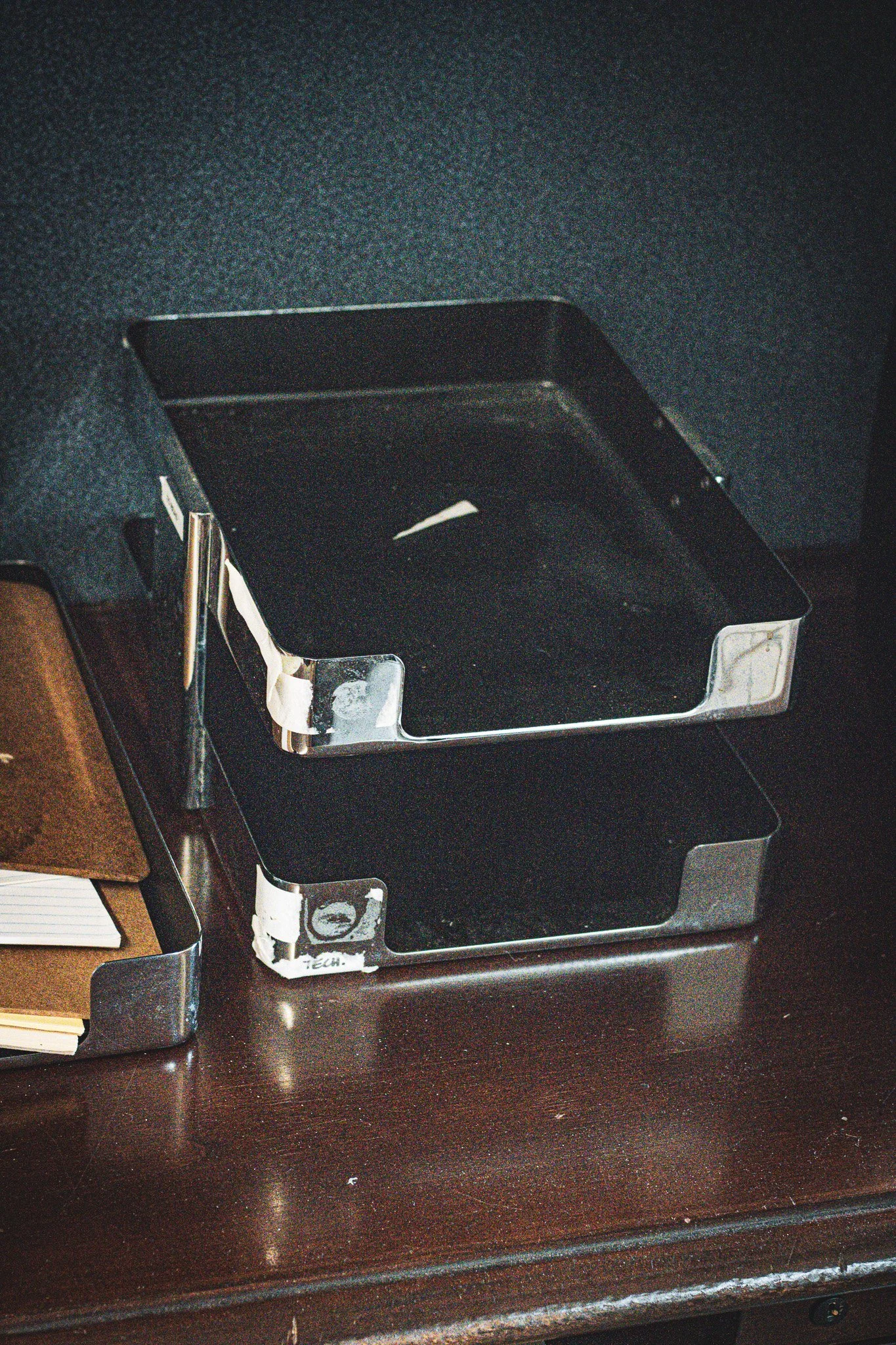
So maybe the plastic document shelf is quite valuable after all!
But what of the empty spaces on my desk? What of the places where my predecessor removed what was there and wiped down the surface, leaving nothing but a blank slate? These empty spaces become even more laden with possibility because of their context with the items that remain.
With a season that heavily utilizes our Company Artists and our facility, as well as empowers the staff with new responsibilities, a foundation was created onto which I could begin focusing new ideas and priorities. I was able to program the company’s first Spanish-language opera in its 80-year history, as well as select a wide range of repertoire suited to our in-house artists, therefore deepening audience impact. The desk still has plenty of empty space, which I’m in no rush to fill. My goal is to slowly and organically look for the new things to put on the desk. Cluttering the desk too quickly could very easily overwhelm it.
In my office, there is also a second desk (which is great for this metaphor). I’m looking at this second desk as my work with OperaDelaware’s Board of Directors. This is a slightly more complex desk to sit at since, while the board has cleared some space for me, their own years of dedication already occupy significant parts of the desk (and for which I am extremely grateful). Sharing a desk to co-work with so many others is an exciting enterprise, and I am very lucky to have such a great bunch of “co-workers” in the OperaDelaware board. In this shared space, we collaborate in the deepest sense of the word. We share across the table, huddle into smaller groups to attack specific tasks, and move around the table as the momentum of good board work builds. From this shared space, I return to my single desk energized, full of new ideas, and clear directives.
As I continue through my second full-time week at OperaDelaware, I am honored to sit at these desks and lead a company with such rich history. I will continue to pause to look around in the days, weeks, months, and years ahead. Even the items I put on the desk myself will need to be examined every so often. It is only by doing this that my work can continue to be as effective and responsive as possible. I will, of course, make some mistakes along the way. I may discard some things on my desk, and then find I need them again. But sometimes the choice to throw away an old mug that is coffee-stained and chipped is a difficult decision that ultimately makes room for something you never expected.
What do you see as you look around your workspace? What items did you inherit? A stapler, a phone, a plastic document shelf? I encourage us all to consider the stapler every so often. Maybe it’s time to replace it or maybe in our digital age it has become obsolete. Who knows what might turn up to fill that space?
And finally…I can think of no better way to spend the time away from your desk than going to the opera! Whether you are a longtime opera fan, have been curious about it, or are just looking to plan a new and interesting date night, I encourage you to consider opera. And if you think that your “social desk” doesn’t have room for opera, I invite you to look again. There’s always at least a little space for something new.
Please visit www.operade.org for more information about the exciting work we’re doing and for ways to get involved and deepen your experience. I look forward to seeing you at the opera!